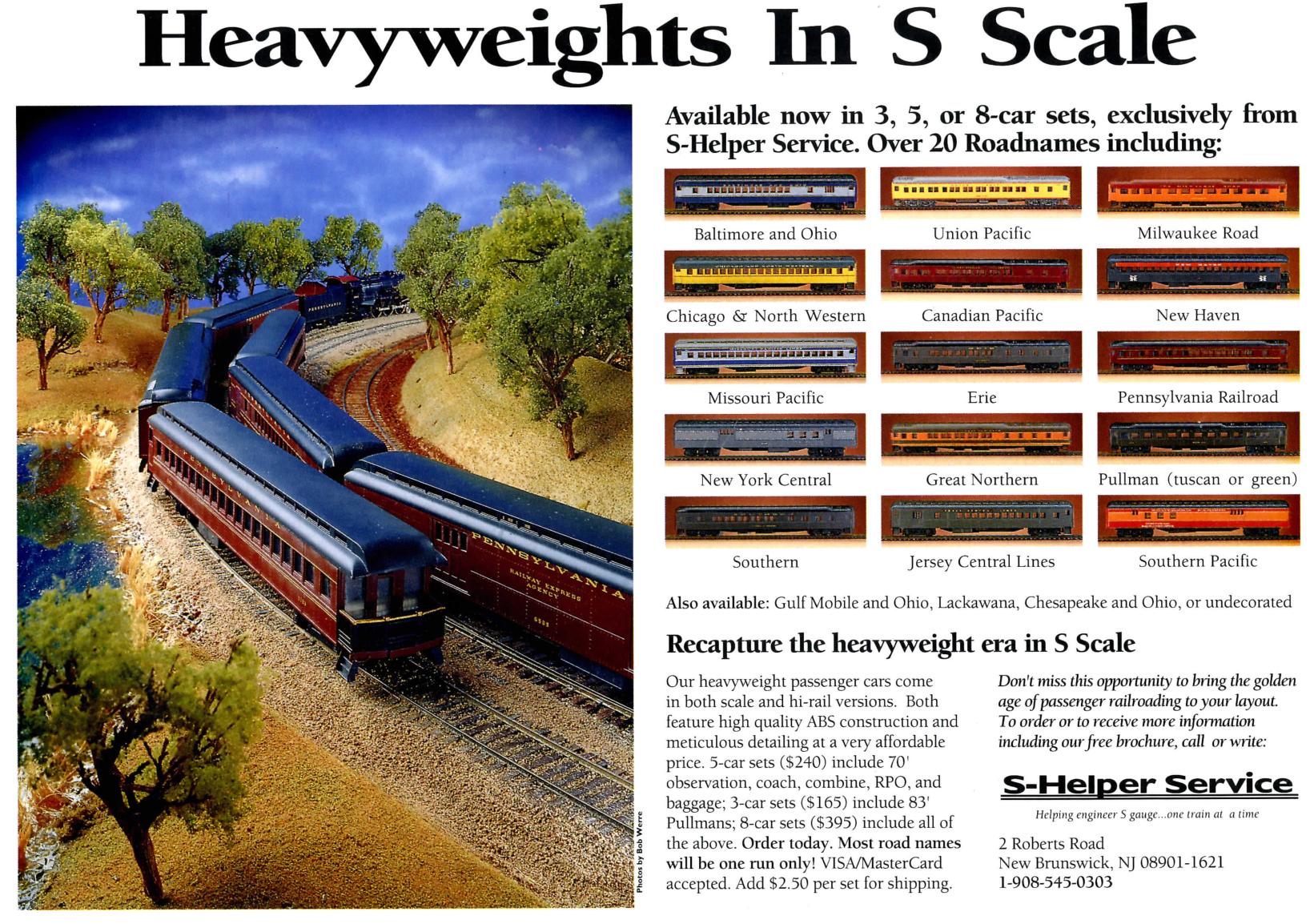
S-Helper Service Passenger Cars Sets

History
S-Helper Service, during their collaboration period with American Models, had American Models produce for them a large collection of passenger cars. The project was started in 1991, and the cars appeared on the market in 1992. They arrived in boxes similar to the American Models ones and with the same colors, except that they had S-Helper Service graphics on them. The boxes displayed no numbers on the outside.
After S-Helper Service sold their paid-for inventory, American Models continued to manufacture and sell these cars directly, starting in 1995. Some of these are still available today, however, if you are looking for a specific car, you will likely need to check the secondary market (private sales, mailing lists, train shows, auction sites, etc.).
Sets
They produced cars for many road names (see below), all but one available in three sets. One set contained three cars, another contained five cars, and the last one contained all 8 cars.
The three-car set consisted of three 82' Pullman cars, which were the cafe/diner car, the 12-1 sleeper car, and the 10-1-2 sleeper car. The five-car set consisted of a 70' baggage car, a Railway Post Office car, a coach, a combine (combination passenger coach and baggage car), and an observation car. The eight-car set was simply the combination of the three- and five-car sets. The cars were also available singly, although the sets were more economical for both the manufacturer and the modeler, if you wanted more than one.
Runs
S-Helper Service had American Models produce two runs. Don recalls that over 7,000 cars were sold with the first run. The second run was done in 1993, as the first run was a run-away success.
In 1995, as American Models continued to produce these models, they added a center metal weight to help the cars track better, made the centersills shorter at the ends, so that the trucks could swivel more (for tighter-radius layouts), installed interior lighting, and introduced the silhouettes. These four changes were not part of the original S-Helper Service specifications.
Prototypes
Don Thompson reports that the cafe/diner car, the coach, the combine, and the observation cars were based on Central Railroad of New Jersey prototypes. The baggage and the Railway Post Office cars were based on New York Central prototypes. The sleeper cars were based on Pullman prototypes.
Road Names
The cars were produced for the following road names:
- (undecorated; Pullman-green body color)
- Baltimore & Ohio (B&O)
- Canadian National (CN); new for the second run
- Canadian Pacific (CP)
- Central Railroad of New Jersey (CNJ)
- Chesapeake & Ohio (C&O)
- Chicago & North Western (C&NW)
- Delaware, Lackawanna & Western (DL&W)
- Denver & Rio Grande Western (D&RGW); new for the second run
- Erie Railroad (ERIE)
- Great Northern (GN)
- Gulf, Mobile & Ohio (GMO)
- Milwaukee Road (MILW)
- Missouri Pacific (MP)
- New York Central (NYC - two-tone gray)
- New York Central (NYC - green); five-car set only; new for the second run
- New York, New Haven & Hartford (NH)
- Pennsylvania Railroad (PRR)
- Pullman (green body color)
- Pullman (tuscan body color)
- Southern Pacific (SP)
- Southern Railway (SOU)
- Union Pacific (UP)
The Northern Pacific cars were announced, but, according to their newsletter at the time, only one car was pre-ordered, so the company canceled that road name.
Body Styles
Below are pictorial examples of each of the body styles mentioned above. Click the photo to see a larger view, if so desired.
Baggage Car
The 70-foot baggage car is based on the New York Central prototype. The model shown in the photo is of the car that was the 2013 NASG Special Project car. This car was only available in the 5-car set, and so the NASG commissioned American Models to produce it as a single undecorated car. The car came with the AF-style couplers, but Bill has replaced those with Kadee-style couplers for this photo. Otherwise, this car is identical to the one that S-Helper Service commissioned from American Models back in 1992.

copyright © Bill Winans
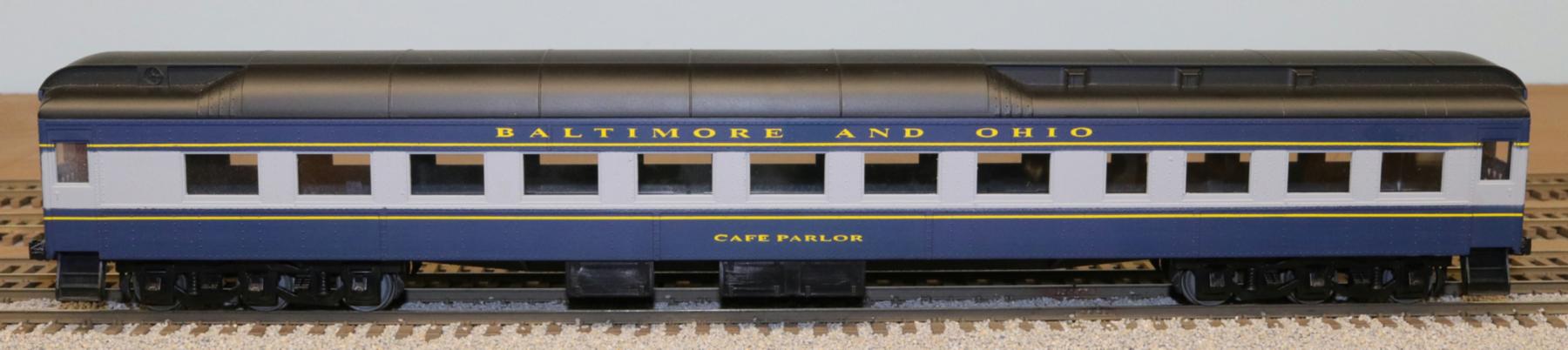
Cafe/Diner Car
This example of the B&O car is shown here with Kadee-style couplers installed. The roof line of the car is slightly different between the two sides of the model; the AC ducting on the roof is shorter in this view, and it is longer on the other side.
copyright © Bill Lane
Coach Car
The S-Helper Service Central Railroad of New Jersey coach, upon which this model's prototype was based, is shown here with Kadee-style couplers installed.

copyright © Bill Lane
Combine Car
S-Helper Service called this their "combine" car, which was part passenger coach and part baggage car. The model shown here with Kadee-style couplers installed.

copyright © Bill Lane
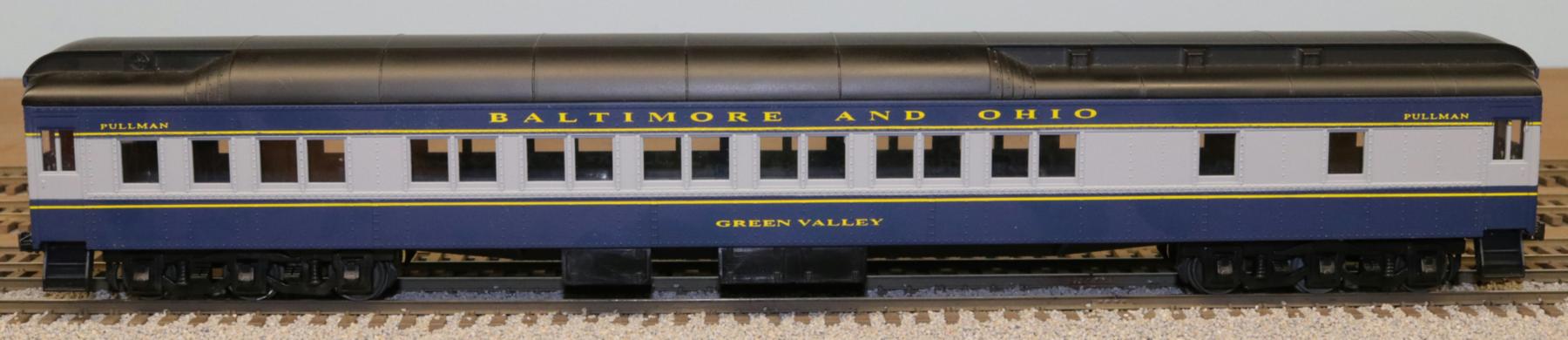
12-1 Sleeper Car
The 12-1 sleeper is a Pullman-prototype overnight sleeping car with the configuration of 12 open sections and one drawing room. The drawing room was typically reserved by a family. This style of Pullman car was a very early implementation. The men's bathroom on one side also served as the smoking room, while the women's bathroom on the other side had a vanity. The car has a different window and roof configuration on each side. This first photo shows a AC ducting on the roof that is shorter in this view, and the majority of the windows are mostly grouped in pairs.
copyright © Bill Lane
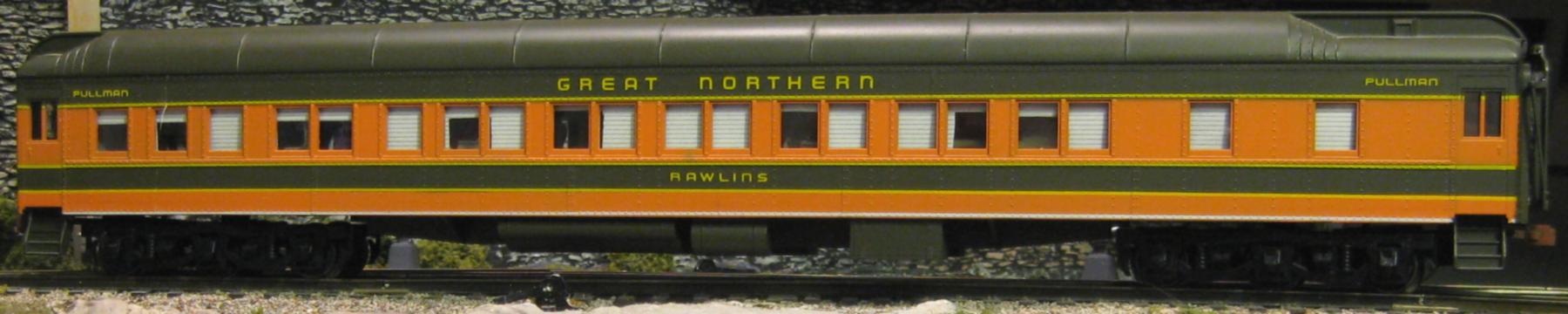
The next photo shows the other side, where the roof's AC ducting is longer, and the window configuration is subtly different.
copyright © Terry O'Kelly
10-1-2 Sleeper Car
The 10-1-2 sleeper is a Pullman-prototype overnight sleeping car with the configuration of 10 open sections, one drawing room (two sections plus one sofa that could be turned into a third berth, all enclosed in a private space), and two compartments (each offering two sections, plus a toilet and a sink). The car has a different window and roof configuration on each side. This first photo shows the AC ducting on the roof that is longer in this view, and the majority of the windows are mostly grouped in pairs.
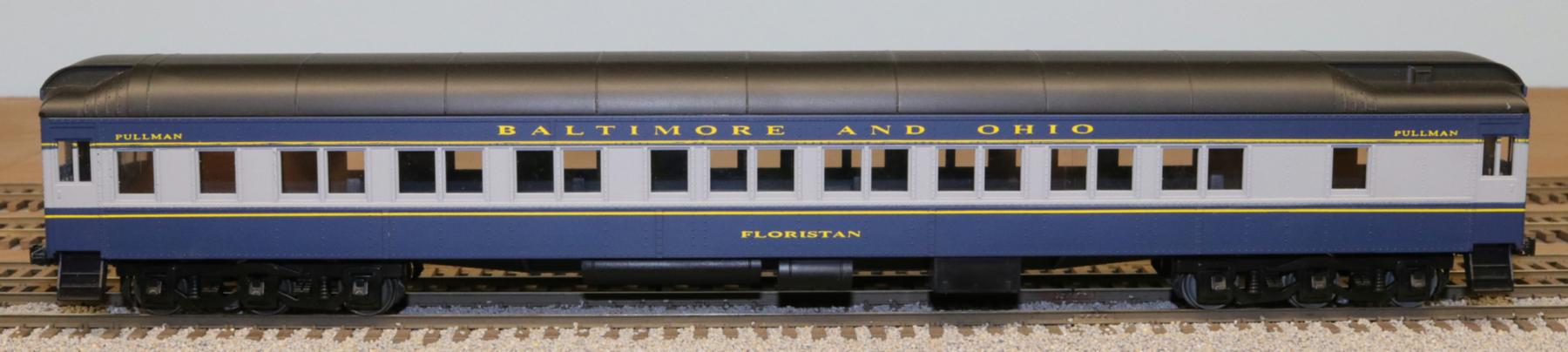
copyright © Bill Lane
The next photo shows the other side, where the roof's AC ducting is shorter, and the window configuration has some pairs and some singles.
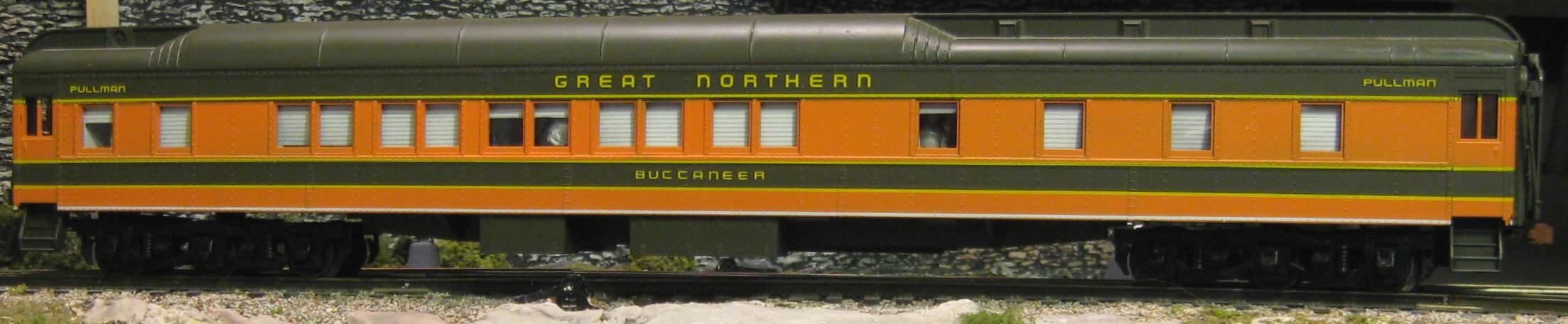
copyright © Terry O'Kelly
Railway Post Office Car
The RPO car has a baggage section and a mail sorting section. The model is shown here with Kadee-style couplers installed.
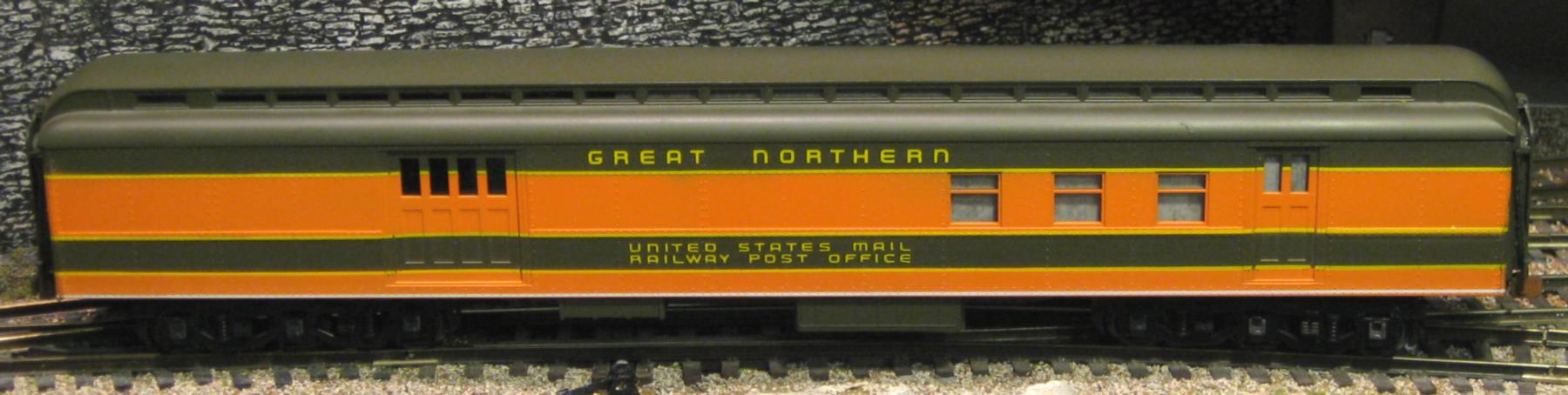
copyright © Terry O'Kelly
Observation Car
The observation car had an open vestibule on one end. The model shown here has the Kadee-style couplers installed.
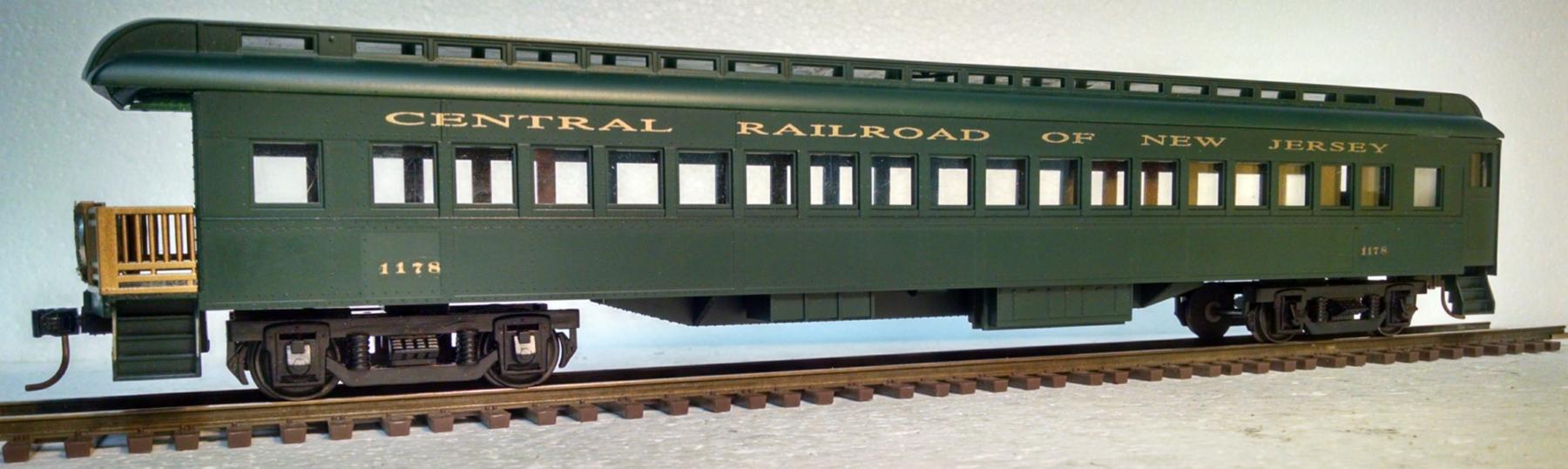
copyright © Hugh Sinn
Advertisement
The back of the April 1992 issue of the NASG's The Dispatch has the most-representative advertisement of the sets at the time. The photography was done by Bob Werre, a well-known S-scale modeler and professional photographer based in Houston, Texas. The main photo on the left was set up on the Houston S Gaugers' club layout, with the cars being positioned on one of the club's corner modules. The club's layout features hand-laid code 100 rail, and Bob set up a custom background. Click on the image to see a larger version.