
fantasy: American Flyer 4-6-2 by A.C. Gilbert

Model Manufacturer Info
Manufacturer:
A.C. Gilbert
Manufacturer ID:
290
Prototype Info
Category:
4-6-2
Road Name:
fantasy: American Flyer
Model Info
Gauge:
AF
Road Number(s):
290
Product Type:
Die-cast
Finish:
painted & lettered
Power:
AC
Couplers:
AF
Online Article:
Online Article:
Notes:
The plain or non-streamlined version. It represents the 290-series of models. These have a cast-metal body. One variation has link-and-pin style couplers, and the other variation has knuckle style couplers. All of the #29x-series locomotives share the large round feedwater heater on the top front of the boiler.
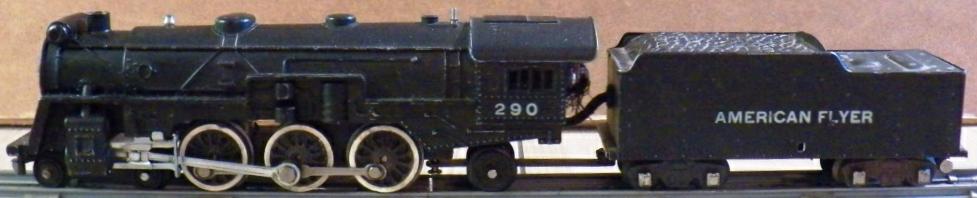
(image copyright © David Dewey; used by permission)
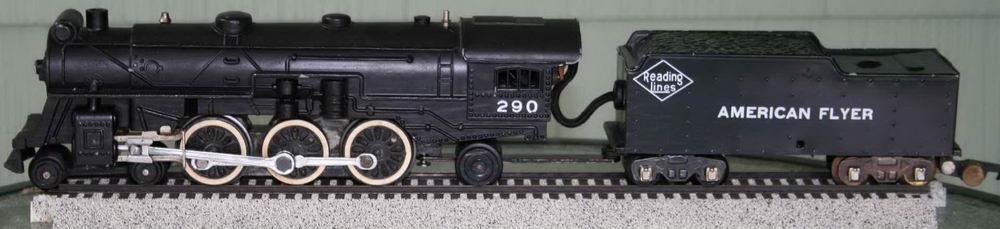
(image copyright © Jim Hammond; used by permission)
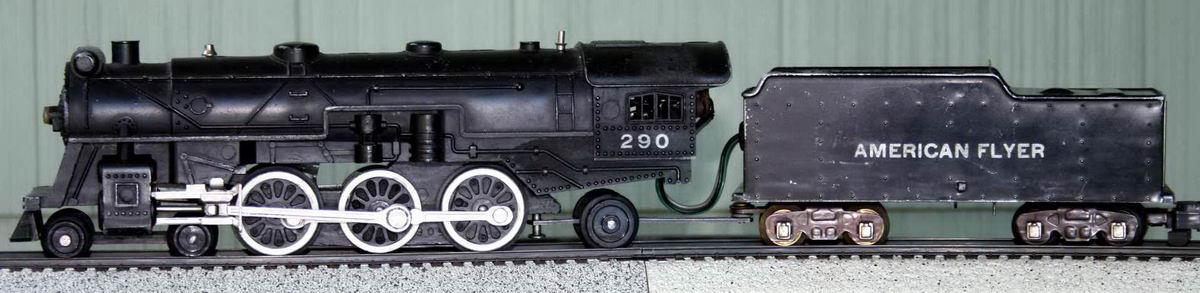
(image copyright © Jim Hammond; used by permission)
Disassembly, Motor Replacement, DCC Installation
Running on a Layout
Replacing Headling Lens, Boost Smoke
Model Manufacturer Info
Manufacturer:
A.C. Gilbert
Manufacturer ID:
295
Prototype Info
Category:
4-6-2
Road Name:
fantasy: American Flyer
Model Info
Gauge:
AF
Introduced:
1951
Road Number(s):
295
Product Type:
Die-cast
Finish:
painted & lettered
Power:
AC
Couplers:
AF
Online Article:

(image copyright © Jim Hammond; used by permission)
A deep dive into this rare engine.
Comparing #285 and #295
Model Manufacturer Info
Manufacturer:
A.C. Gilbert
Manufacturer ID:
314AW
Prototype Info
Category:
4-6-2
Road Name:
fantasy: American Flyer
Model Info
Gauge:
AF
Introduced:
1949
Road Number(s):
314AW
Product Type:
Die-cast
Finish:
painted & lettered
Power:
AC
Couplers:
AF
Notes:
This model was produced in 1949 and 1950 and was labeled for both the Pennsylvania Railroad and American Flyer. The boiler and tender were made out of diecast metal. The whistle unit is located in the tender and controlled by a separate control box (shown in the photo) with a spring-activated switch, which applies a small amount of DC current to the track that allows the whistle to blow. There are two reported variations of #314AW. The first has a one-piece trailing trucks while the second has diecast trailing trucks. Gilbert pulled the #314AW from the market for two reasons: a pending lawsuit by Lionel for patent infringement, and the whistle unit was an operational repair headache for the service stations.
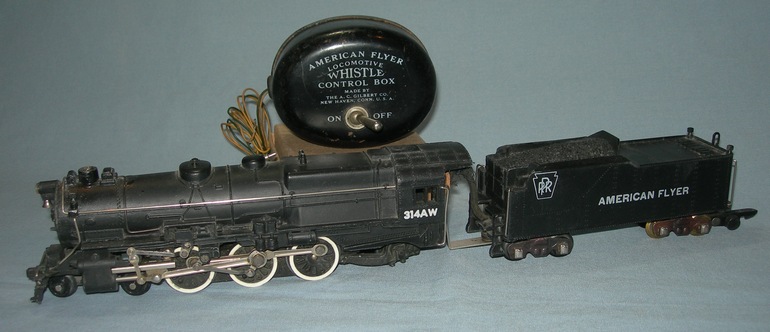
(image copyright © Ted Hamler; used by permission)
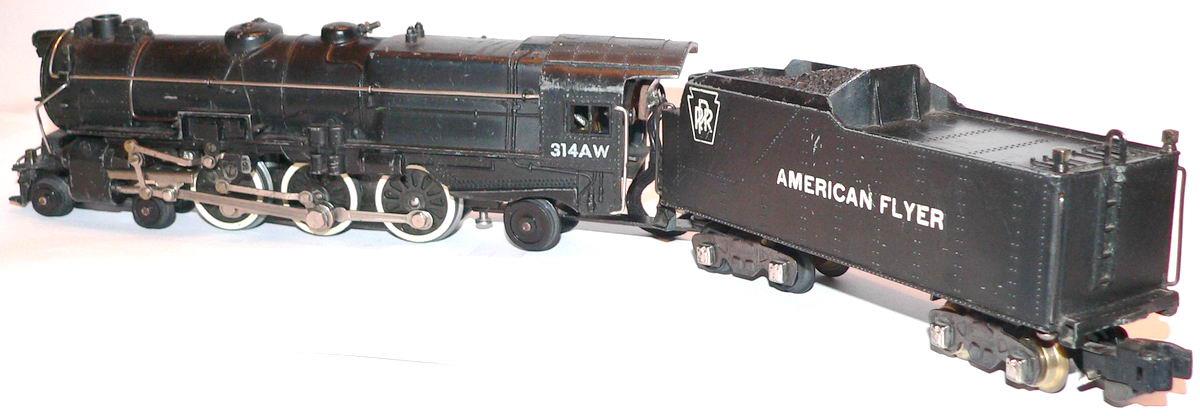
(image copyright © Jim Hammond; used by permission)
Parker Sheehey testing a serviced model.